The FCC

When my cell phone company gave me the run around, I got tired of dealing with them and reported them to the FCC. That got some action. It also helped that I sent a letter to the company's CEO.

It is bad business to be at odds with the FCC. For Microsoft, it helps if the FCC has their sights aimed at other companies that are behaving badly.

This blog post excerpt from Jason Calcanis, reprinted with permission here, is a rant against the machine known as Apple Corporation.

Apple took Google’s innovative and absurdly priced phone offering, Google Voice, out of the App Store and is currently being investigated by the FCC for this action. This point is similar to the browser issue, in that Apple wants to own almost every extension of the iPhone platform. How long before Apple decides to ban a Twitter client in favor of an Apple Twitter-like product? Seems crazy, I know, but by following Apple’s logic you should not be able to use Firefox or Google Chrome on your desktop.

Simple solution and opportunity: Let people have three or four phone services coming in to their iPhones and perhaps charge a modest licensing fee for those types of service. Or, just simply stop being jerks and let the free market decide how to use the data services they’ve BOUGHT AND PAID FOR. That’s the joke of this: you’re paying for the data services that Apple is blocking. You pay for the bandwidth and Apple doesn’t let you use it because, you know, they know better than you how you should consume your data minutes.

Browser Wars Redux

Microsoft is once again finding other browsers eating its lunch. I use Internet Explorer. But it is no the sexy way to go. Here is a position taken by Jason Calcanis, reposted with permission, that tells how some other companies are having trouble with browsers as well.

Opera is a fantastic browser built by a company in Oslo, Norway. In fact, a decade ago, I had a speaking gig there and got to interview the CEO of the company for Silicon Alley Reporter. (Sidebar: Man, do I miss being a journalist. I wish I could split 50% of my time being a journalist and 50% of my time being a CEO.) For over a decade, Opera has been making lighting-fast, lightweight and quirky browsers. Long before Apple launched Safari, with the goal of designing the fastest browser on the Web, Opera was already there.

Opera’s mobile browsers are “full of WIN,” as the kids like to say these days. If you’re a Windows Mobile or Blackberry user, you’ve probably downloaded them and enjoyed their WINness. The company started an iPhone browser project but gave up when faced with Apple’s absurd and unclear mandate to developers: Don’t create services which duplicate the functionality of Apple’s own software. In other words: “Don’t compete with us or we will not let you in the game.”

The irony of this is not lost on anyone who had a computer before they had an Internet connection. Apple was more than willing to pile on after Microsoft’s disastrous inclusion of Internet Explorer with Windows. In fact, what Apple is doing is 100x worse than what Microsoft did. You see, Microsoft simply included their browser in Windows, still allowing other browsers to be installed. In Apple’s case, they are not only bundling their browser with the iPhone, but they are BLOCKING other browsers from being installed.

Simple solution and opportunity: Don’t be a control freak and hypocrite. Allow people to pick their browser; the competition to make a better browser will increase the overall use of iPhones and mobile data services.

The App Store

Microsoft has essentially been a shrink wrapped software company from the beginning. With all the web hubbub, you would think that Microsoft is a dinosaur. However it is not so easy to sell software over the Internet. As you will see from the Jason Calcanis blog snippet, it is tough to manage third party software sold on the web. This excerpt is posted with permission from Calcanis:

Like lemmings, we fell for your bar charts extolling the openness of the iPhone App platform and its massive array of applications. We over-paid for your phone–which you render obsolete every 13 months, like clockwork–and then signed our lives away to AT&T. The way you pay us back is by becoming the thought police, deciding what applications we can consume on the device we over-paid for!

Yes, every application on the phone has to approved by Apple, and if you were interested in something adult in nature…well…you can’t do that.

Apple’s justification for this nonsense is that they have to protect AT&T’s network. Oh really? Aren’t there dozens and dozen of open phones on everyone’s network? The network hasn’t crashed yet, and even if someone did create a malicious iPhone application, you would know EXACTLY who was running the application and be able to block and/or turn off their phone. The network was MADE to deal with these issues on a NETWORK level. To say you have to control people down to the application level defies all logic. A second year CS student understands this.

Who in their right mind feels the need to control the application-level anyway? It’s absurd.

Imagine for a moment if every application on Windows Mobile or Windows XP had to be approved by Microsoft–how would you react? Exactly. Once again we’ve enabled Steve Jobs’ insane control freak tendencies. This relationship is beyond dysfunctional–we are co-dependent.

Simple solution: Apple could have a basic system setting that says “Allow Non-Approved Applications.” When you click this setting, a pop up could come on warning that, if you click this setting, you are waiving your previously-understood customer service arrangement (i.e. only people with approved applications can hand over their money at the Genius bar).

Telco Monopolies

The United States Department of Justice has a hard on for Microsoft. A weaker company would have caved and gone out of business. However Microsoft has stayed the course. They still are the easy target for cries about anti competitive behavior. But you would be surprised at other companies that are being evil these days. Check out this blurb from a post by Jacon Calcanis, reprinted with his permission:
Apple’s iPhone is a revolutionary product that has devolved almost all of the progress made in cracking–wait for it–AT&T’s monopoly in the ’70s and ’80s. We broke up the Bell Phone only to have it put back together by the iPhone. Telecommunications choice is gone for Apple users. If you buy an Apple and want to have a seamless experience with your iPhone, you must get in bed with AT&T, and as we like to say in the technology space, “AT&T is the suck.”

Simple solution and opportunity: Not only let the iPhone work on any carrier, but put *two* SIM card slots on the iPhone and let users set which applications use which services. (Your phone could be Verizon and your browser Sprint!) Imagine having two SIM cards with 3G that were able to bond together to perform super fast uploads and downloads to YouTube.

MP3 Player Innovation

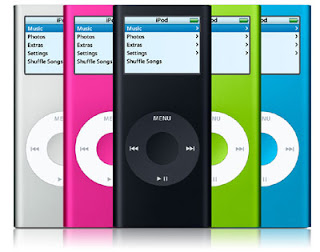
The Microsft Zune seems to be a futile effort to compete with the Apple iPod. However not all is right at Apple Corporation. Here is part of a post from Jacon Calcanis reprinted with his permission:

There is no technical reason why the iTunes ecosystem shouldn’t allow the ability to sync with any MP3 player (in fact, iTunes did support other players once upon a time), save furthering Apple’s dominance with their own over-priced players. Quickly answer the following question: who are the number two and three MP3 players in the market? Exactly. Most folks can’t name one, let alone two, brands of MP3 players.

On my trips to Japan, China and Korea over the past couple of years, I made it a point to visit the consumer electronics marketplaces like Akihabira. They are filled with not dozens, but hundreds, of MP3 players. They are cheap, feature-rich and open in nature. They have TV tuners, high-end audio recorders, radio tuners, dual-headphone jacks built-in and any number of innovations that the iPod does not. You simply will not see those here because of Apple’s inexcusable lack of openness.

Not only does Apple not build in a simple API to attach devices to iTunes, they actually fight technically and legally block people from building tools to make iTunes more compatible.

Think for a moment about what your reaction would be if Microsoft made the Zune the only MP3 player compatible with Windows. There would be 4chan riots, denial of service attacks and Digg’s front page would be plastered with pundit editorials claiming Bill Gates and Steve Ballmer were Borg.

Why, then, does Steve Jobs get a pass?

Steve Jobs gets a pass because we are all enabling him to be a jerk. We buy the products and we say nothing when our rights are stripped away. We’ve been seduced by Steve Jobs: he lifts another shiny object over his head with a new eco-friendly feature and we all melt like screaming schoolgirls at Shea Stadium in ‘65.

Simple solution and opportunity: An iTunes API which allows the attachment of any mass storage device,not just a short list of players that jumped through Apple’s hoops. If need be, perhaps consumers pay a simple licensing fee of $1-5 a unit to attach a non-Apple MP3 player to iTunes (i.e. pure profit for Apple).

Visual Studio 2010

Just today some higher ups in my company wanted to know when support for our current products ran out. I did some research on the Microsoft site and found that we were good with Visual Studio 2005 until April 2011. Then the big shots asked me what we should replace our current tools with. I told them if we were to do an upgrade right now, they could purchase Visual Studio 2008. However in a year or two, I would be recommending a move to Visual Studio 2010.

Visual Studio Magazine has written about the work done and plans for Visual Studio 2010. It is to be put into Beta this month (March 2009). The Beta 2 is scheduled for later this year (December 2009).

Microsoft plans to remodel the IDE for Visual Studio 2010. They also are preparing a new code editor for developers. I hear that it is built upon Windows Presentation Foundation (WPF). If WPF is good enough for the Visual Studio developers, it might be time to be getting familiar with it myself.

The goal of the new version of Visual Studio is to make application look modern and more intuitive for the users. They did not employ the Ribbon user interface as they did with Office 2007. They instead have focused on Windows 7. There is one change that I am very glad to hear about. Microsoft is bringing back the MFC class wizard. I miss that in Visual Studio 2005. Having spent the better part of a decade using it with Visual Studio 6, this will help my productivity.

MFC may be an old framework. You are not going to get any developer credit by using MFC. However if you know MFC, then you will be productive. And it is good when Microsoft updates and pays attention to the tools and frameworks you need to be productive.

FAT File System

I have heard from a number of sources that Microsoft is suing TomTom for use of the patented Microsoft FAT file system. TomTom is a maker of GPS devices. They use Linux as the embedded operating system for these devices. Linux in turns supports both the FAT file system, and the FAT long file name format. These are patented technologies that Microsoft is working to protect.

Microsoft has 18 different licenses related to the FAT file system. However it is not a simple solution for TomTom to license the technology from Microsoft. This is because the license may violate the GPL license under which they use Linux.

Microsoft’s FAT licensing program charges 25 cents per unit. The maximum cost per manufacturer is $250k. These prices are per terms previously listed on Microsoft’s web site. However this information has suspiciously disappeared recently from Microsoft. That might have something to do with this dispute between Microsoft and TomTom.

This lawsuit appears to be Microsoft taking a stand against Linux use of their patents without license. TomTom is probably a high profile and lucrative user of Linux. There are people on the free software side that consider Microsoft for making this move. However from a purely legal standpoint, I bet they have a case.

Normally I mention specifics tools from Microsoft here on my blog. However I thought I would mention the FAT file system legal issues here because it is relatively current news. The FAT file system itself is an older technology. I believe it had been improved when it moved to a 32 bit implementation. However the implementation, and I presume the patents, are nothing new.